Say you're under contract on a bungalow in Trinity Park at $445,000. Your offer beat two others. The seller is thrilled, you're thrilled, and then the appraisal comes back $20,000 short. Your lender won't budge past the appraised number, and now you're the one deciding whether to write a check for the difference, ask the seller to come down, or walk.
Four blocks away in Watts-Hillandale, a buyer under contract for $501,250 sails through the same process without a hiccup.
Same city. Same season. Same distance from Duke's East Campus. Different outcome, and the median price on the listing sheet had almost nothing to do with it.
The Comps Problem Nobody Puts on the Term Sheet
An appraisal isn't an opinion of what a home is worth today. It's a documented argument built from recent, comparable sales in the immediate area. When an appraiser has a dozen closed sales from the last six months to draw on, the number they land on tends to track the contract price closely. When they have three or four, the math gets shaky, and shaky math tends to land low rather than high.
That distinction is exactly why 2026 has been a rough year for appraisal gaps nationally. Industry reporting this year points to thinner comp volume as one of the clearest drivers of the problem: fewer closed transactions mean less data for an appraiser to lean on, and less data means more room for the appraised value to miss the contract price entirely.
When a gap shows up, a buyer has four real options, in roughly this order of preference:
- Cover the shortfall in cash, since lenders won't finance above the appraised value.
- Renegotiate the price down with the seller to match the appraisal.
- Split the difference, a common compromise that keeps deals moving.
- Walk away and lose the Due Diligence fee paid to the seller.
None of these are pleasant. All of them are more likely in a market where the comp pool is thin. That's the piece a portal's median price will never show you, and it's the reason two Duke-adjacent neighborhoods with similar sticker prices can feel completely different once you're actually under contract.
Two Neighborhoods, Two Very Different Comp Pools
Trinity Park and Watts-Hillandale sit next to each other, share a housing era, and pull from overlapping buyer pools. But look at how their recent sales activity actually behaves.
Neighborhood | Recent Median Sale Price | Days on Market | What the Sales Volume Signals |
|---|---|---|---|
Trinity Park | $445,000 (March 2026) | 146 days | Only five homes sold that month, thin enough that one unusual sale can swing the median |
Watts-Hillandale | $501,250 (same recent window) | 30 days | Far faster turnover, a comp pool an appraiser can actually work with |
A local brokerage tracking these numbers put it plainly: a single month of data in a low-volume neighborhood should be read as directional, not definitive. Trinity Park isn't an outlier in this respect either. Nearby Forest Hills saw just two sales in the same March window, which means both neighborhoods carry the same structural risk even though their price points differ.
That 146-day median days-on-market figure for Trinity Park is also up from 136 days the year before, a shift worth sitting with. It doesn't necessarily mean buyer interest has cooled. In a neighborhood this small, it can just as easily mean the handful of homes that did sell needed more time to find the right match, which is a different story than a market losing steam. The data can't tell you which explanation is true. Only the specific comps can.
A median price describes what already sold. It doesn't promise what a lender's appraiser will agree to on your specific contract next month.
What Actually Differentiates the Two Blocks
None of this means Trinity Park is the wrong choice. It means the reasons to choose it have nothing to do with financing ease and everything to do with the neighborhood itself.
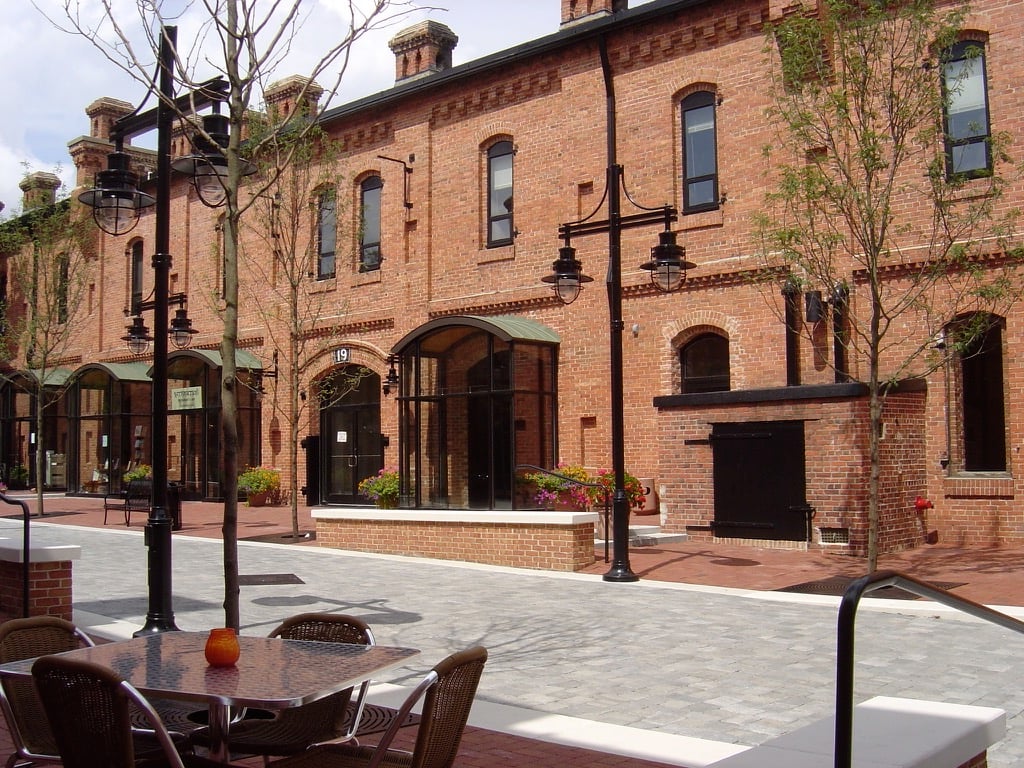
Trinity Park sits on the National Register of Historic Places, forty square blocks of tree-lined streets between downtown and Duke's East Campus. The Trinity Park Neighborhood Association is one of the city's oldest and most active, and its Home Tour tradition dates back to 1975, drawing hundreds of visitors through renovated Victorians, Colonial Revivals, and Craftsman bungalows every couple of years. Past tours have routed through Beth El Synagogue and Watts Street Baptist Church, and proceeds have funded real improvements to the neighborhood's namesake park, from new plantings and benches to restored granite steps at its entrance on West Trinity Avenue. If you're buying here, you're buying into a level of civic investment that's rare in a city this size.
Watts-Hillandale trades some of that historic density for a stronger commercial pulse. Its Hillsborough Road corridor is anchored by Cocoa Cinnamon, the neighborhood's best-known coffee bar, along with a run of independent restaurants and shops that residents can reach on foot. The numbers back that up too, with a Walk Score of 55, a Bike Score of 74, and enough steady turnover that recent buyers aren't waiting on a thin trickle of comps to justify their offer.
Neither trade-off is objectively better. But if you're comparing the two purely on the strength of a median price, you're missing the variable that actually determines how smooth your closing will be.
Old West Durham Sits in the Middle
If Trinity Park and Watts-Hillandale represent two ends of the comp-liquidity spectrum, Old West Durham lands closer to the middle. Prices there run in the $450,000 to $550,000 range, similar territory to both neighbors, and homes here have a reputation for moving quickly, often in three weeks or less. That kind of pace suggests a deeper, steadier comp pool than Trinity Park's, even without the granular sales-volume data to confirm it precisely.
The takeaway isn't that one of these three neighborhoods is the safe choice and the others are traps. It's that price alone won't tell you which one you're walking into.
What This Means If You're Comparing These Blocks
If a Duke-adjacent historic pocket is on your list, ask your agent for actual closed-sale counts over the last three to six months before you fall for a median. A neighborhood with five sales a month deserves a different offer strategy than one with twenty. In a thin market, that might mean structuring a gap-coverage clause into your offer, capping your exposure while still signaling seriousness to the seller. It might mean building in extra cushion for a lower appraisal from the start, so a low number doesn't become a crisis. It always means having someone in your corner who has watched these specific streets long enough to know which sales are true comps and which ones are noise.
FAQ
Does a low appraisal always kill the deal? No. Most gaps get resolved through cash coverage, a price adjustment, or a split between buyer and seller. The deal only collapses if neither side is willing to move or the buyer chooses to walk away.
How does a buyer protect against appraisal gap risk in a thin market like Trinity Park? A capped gap-coverage clause is the most common tool. It commits the buyer to cover a shortfall up to a set dollar amount, which reassures the seller without exposing the buyer to unlimited risk. Pairing that with an appraisal contingency above the cap preserves an exit if the gap turns out to be larger than expected.
Comparing Duke-adjacent neighborhoods on price alone will only tell you half the story. The other half lives in the comps, and that's where local guidance actually earns its keep. If you're weighing Trinity Park against Watts-Hillandale, Old West Durham, or anywhere else in the Triangle, Erika & Co. can walk you through the real numbers behind the median. Schedule your complimentary market consultation to start with the comps that matter for your specific offer.
This article is general information, not legal, tax or financial advice. Consult a qualified professional about your situation.