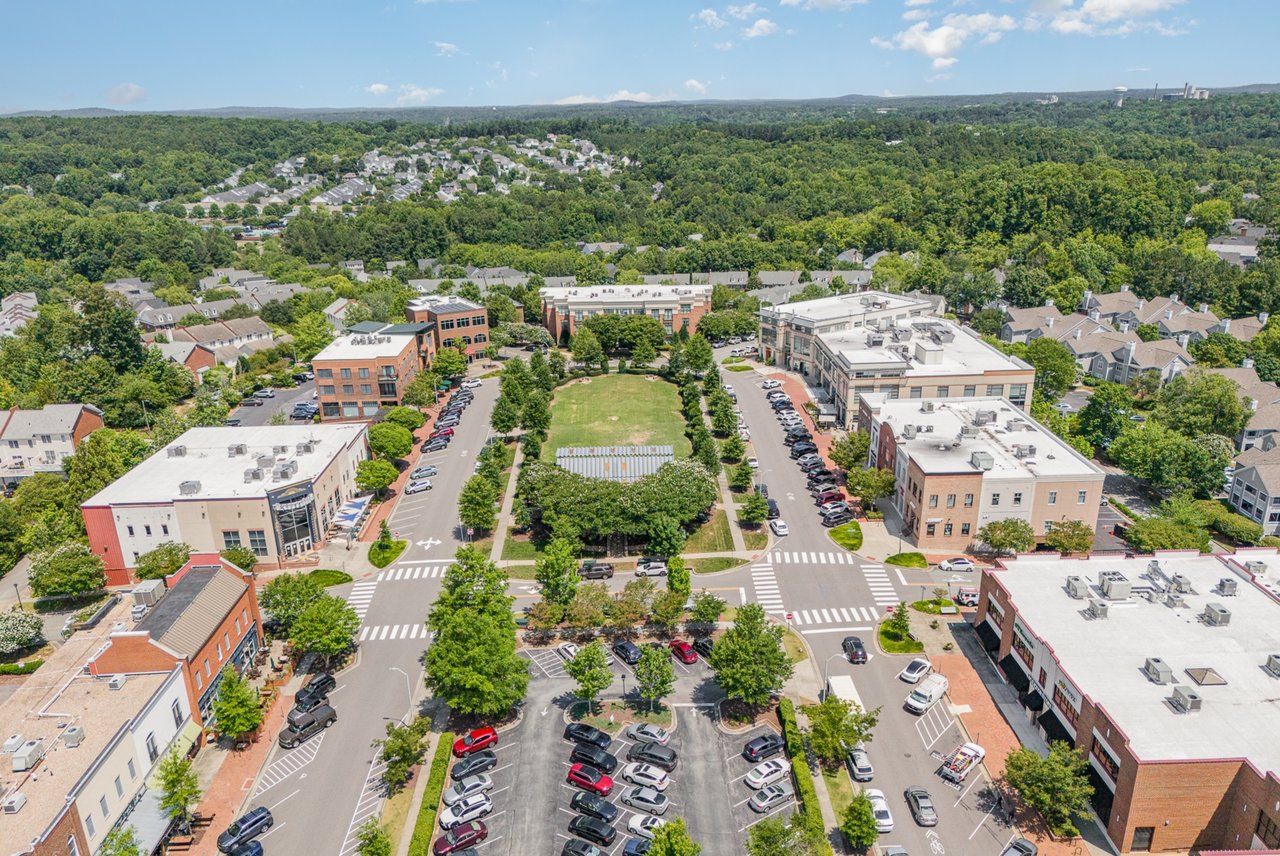
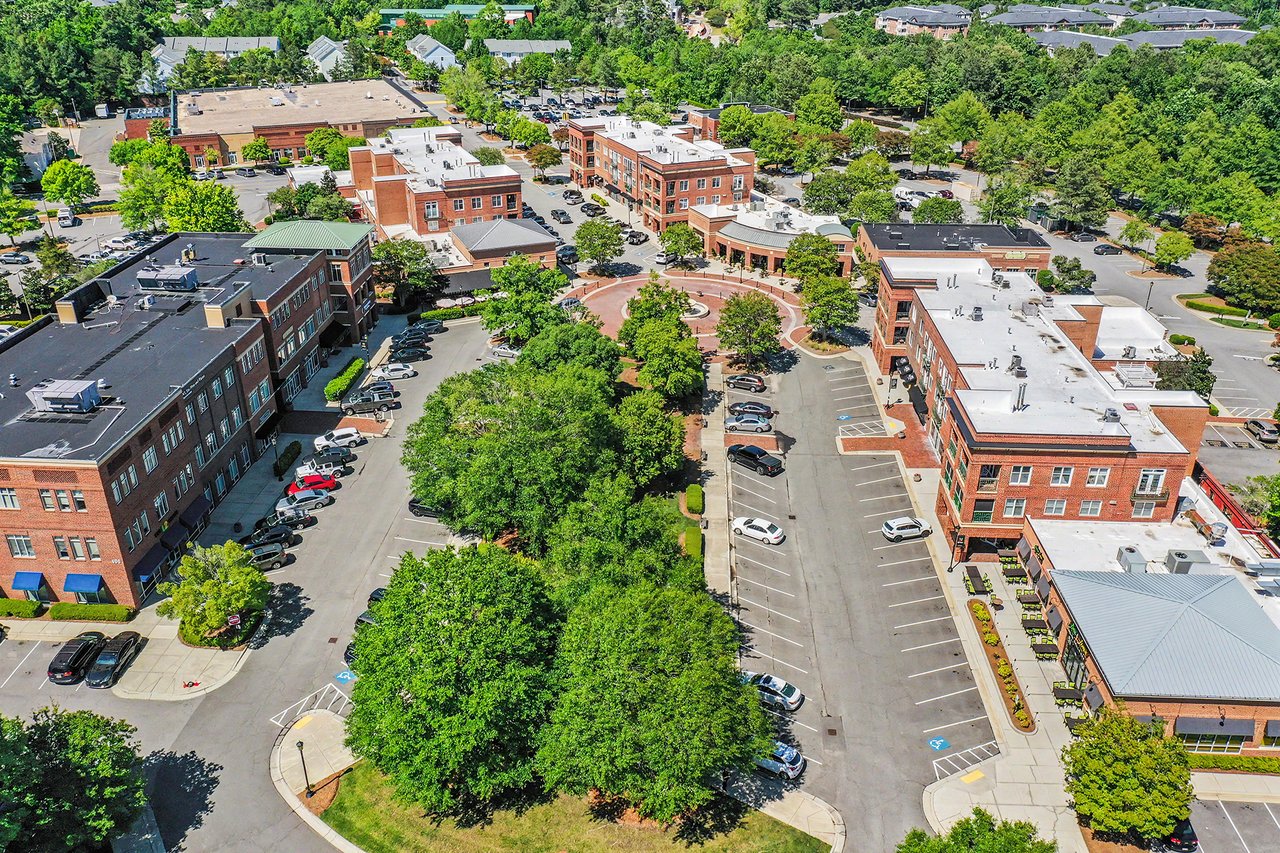
Say you're looking at a house two blocks off Weaver Street. The listing photos show string lights, a coffee shop awning, the kind of scrappy small-town character that made you want to live in Carrboro in the first place. What the photos can't show you is that the town's own council is, at this exact moment, deciding how much of that character survives the next redevelopment cycle, and that the North Carolina legislature has already told Carrboro which tools it isn't allowed to use to protect it.
That's the part of this market most buyers never hear about until they've already made an offer.
The Council Can't Ban What It Didn't Anticipate
In June 2026, a town-hired planning consultant told the Carrboro council something blunter than most zoning updates get: the state legislature can erase years of local planning work in an instant. Chad Meadows of CodeWright Planning pointed to Mills River, a town that had passed its own unified development ordinance under a state exemption, only to have the legislature void that exemption earlier this year and erase the ordinance with it.
The mechanism matters more than the anecdote. North Carolina law now treats certain zoning changes as illegal "downzoning" if they restrict uses the original code never anticipated. Nobody drafting Carrboro's zoning in past decades was thinking about data centers or solar arrays. Under the new state rules, banning them now could be read as downzoning, and downzoning is off the table. The same logic applies to stormwater. Carrboro is a flood-prone town, but property developed before the town had stormwater rules doesn't have to meet new ones, because requiring it would make existing development nonconforming, which the state also restricts.
Meadows put it plainly to the council: this is an area where the town has to lean on incentives rather than requirements, because the legislature has taken the requirement option away.
A Town With Almost No Room Left to Grow
Here's why that restriction lands harder in Carrboro than it would somewhere with open land. Meadows told the council the town has so little vacant land that nearly all future development will be redevelopment of parcels that already have something on them. There's no greenfield subdivision waiting on the edge of town to absorb growth. Every lot that changes hands near downtown is, in effect, a small referendum on what gets built next.
That's what makes the current planning moment unusual. Carrboro's Land Use Ordinance was adopted in 1980 and has only been patched since, never rewritten. The town is now drafting its first full replacement, a Unified Development Ordinance, built to align with the Carrboro Connects Comprehensive Plan the council adopted in 2022 for the 20 years running through 2042. The town's official project page has adoption targeted for winter 2026. If you're closing on a home near downtown this year, you're buying into a town whose operating rulebook is still being written.
What the Plan Actually Maps
The piece that will shape day-to-day redevelopment decisions is the Downtown Area Plan, which the council adopted 6-1 on November 18, 2025. It divides the study area into four character zones, each with different expectations for what gets built:
- Downtown Core – the commercial spine along Jones Ferry Road, Main Street, Weaver Street and Greensboro Street, where new buildings are expected to go multi-story and sit close to the sidewalk.
- Core Extension – the Jones Ferry Road corridor and the active rail line just outside the core, a mix of businesses and homes that's expected to densify over time.
- Surrounding Neighborhoods – the transition blocks along West Main, Hillsborough and Greensboro streets, where the plan calls for infill that matches the existing scale rather than a wholesale change in character.
- Lloyd-Broad – the historically Black neighborhood along Lloyd Street, Broad Street and Starlite Drive, home to the Piedmont Community Health Center and Baldwin Park, which the plan specifically flags for protection from the impacts of nearby redevelopment.
None of this is abstract policy language for someone deciding whether to buy a specific address. If your prospective home sits inside the Core Extension, the plan already anticipates more density arriving next door within your ownership horizon. If it sits in Lloyd-Broad, the plan's stated goal is the opposite: connectivity improvements without displacement pressure.
The Fight Over What This Ends Up Looking Like
The plan didn't pass quietly. Early drafts included renderings meant to illustrate scale and building type, and many residents read them as generic mixed-use blocks that looked nothing like Carrboro. Mayor Pro Tem Danny Nowell pushed to move the renderings into an appendix rather than pull them altogether, arguing they were creating confusion without adding useful information. Council member Randee Haven-O'Donnell cast the lone dissenting vote, saying the plan captured what kind of buildings the town needs but missed the sense of place that actually defines Carrboro.
Council member Jason Merrill was candid about the tradeoff he's willing to make. Asked about preserving downtown's aesthetic against the push for more affordable units, he said:
"This thing's not going to be quite as cute, but people are going to afford to live there."
Terri Buckner, a member of the planning board, made a related point about how well any of this has actually landed with residents who aren't tracking every council meeting. She said the plan is elegant on paper but hasn't been communicated in a way regular people have the time to follow.
The tension isn't hypothetical for business owners either. David Peretin, who owns Tesoro on Weaver Street, has raised concerns about one idea floated in the plan: converting East Weaver Street to a pedestrian-only corridor. He supports pedestrian-friendly design in principle but points out that emergency vehicles and delivery trucks still need to reach the businesses that line that block.
Three Different Numbers, One Small Market
If you've already pulled up Carrboro's numbers on a national portal, you've probably noticed they don't agree with each other, and in a market this size, that's not a data error. It's what happens when a small number of monthly sales gets run through different measurement methods.
Redfin's tracking of actual closed sales showed a median price of $607,000 over the three months ending April 2026, up 26.3% from the same period a year earlier, on just 52 homes sold that April. Zillow's home value index, which models the estimated value of the entire housing stock rather than only homes that sold, put the average Carrboro home at $429,889 as of July 31, 2026, down 3.3% over the past year. Movoto's read on August 2026 closed sales put the median at $485,000, on 57 homes sold, with average days on market stretching to 73 compared with 53 a year earlier.
Those aren't rounding differences. They're three different questions getting three different answers. A median sale price only reflects the mix of homes that happened to close in a given month, and when your total is in the dozens rather than the hundreds, a handful of larger sales near the Core Extension can swing that median by double digits without the value of a typical home moving at all. A home value index tries to smooth that out by estimating the whole stock, which is why it can point the opposite direction of the same month's median sale price. Neither number is wrong. Neither is the whole story.
What This Means If You're Looking Near Downtown Now
The practical takeaway isn't that Carrboro is risky. It's that the character you're buying today is genuinely mid-revision, and the legal tools the town has to shape that revision are narrower than the plan documents alone suggest. A buyer evaluating a home near Jones Ferry Road or the downtown core should be asking which character zone the parcel sits in, what infrastructure work is already funded nearby (the town's FY2027 capital plan includes a Jones Ferry Road sidewalk, a multi-use path on Seawell School Road, and continued design work on the long-delayed Bolin Creek Greenway), and whether the adjacent lots are the kind of redevelopment candidate the plan is actively steering toward more density.
None of that shows up in a listing sheet. It shows up in council minutes, planning board agendas, and the kind of local tracking that comes from watching this market for decades rather than pulling up a portal the week you start looking.
If you're weighing a move into Carrboro, or trying to make sense of what a specific block's zoning designation actually means for your resale horizon, Erika & Co. can walk you through it property by property. Schedule your complimentary market consultation and get the read on Carrboro that the median price alone won't give you.